




November 18, 2026
Airline Outages Are Leaving Travelers Stranded. Will Your Credit Card Insurance Help?
Toni Perkins-Southam
The FAA’s nationwide ground stop on Friday, November 13, may have lasted less than five hours, but the travel headaches didn’t end when flights were cleared for takeoff.
Days later, travelers are still dealing with canceled flights, missed connections and a whole lot of headaches as airlines scrambled to get their operations back on track. And to make matters worse, United Airlines experienced a separate technology outage on Monday, causing even more flight disruptions.
If you were among those left stranded, you might be wondering who’s picking up the tab. Is the airline responsible for your extra expenses? Or could your credit card’s travel insurance come to the rescue?
What Happened With the FAA and United Airlines Outages?
The trouble started with a telecommunications failure that disrupted air traffic control systems across the country. By the time the FAA lifted the ground stop around 8:15 p.m. Eastern Standard Time, the damage was already done. According to the FAA, airlines canceled over 12,000 flights that Friday.
Just as airlines were getting back on track, United experienced a separate technology outage on Monday, November 16. The issue affected departing flights before being resolved around 6 p.m. EST. United said there was no indication the problem was related to Friday’s FAA outage.
As you could imagine, getting things back to normal has been anything but smooth skies. With aircraft and crews scattered across the country, airlines have continued dealing with the ripple effects days after flights were cleared to resume.
I saw this firsthand with my husband, who wasn’t even scheduled to fly until Sunday. His flight from Dallas to Salt Lake City was canceled, and the next available flight wasn’t until Tuesday. He spent endless hours in airport lines while simultaneously trying to reach an agent by phone. Spoiler alert: He finally made it home almost 48 hours after he was supposed to arrive.
Unfortunately, being stranded is only half the headache. For travelers facing unexpected hotel bills, meals, and other expenses, the next question is who’s going to pay for it all.
Are Airlines Required To Cover Hotels and Meals?
The good news is that some airlines are helping stranded passengers by providing hotel rooms, meal vouchers, and transportation to and from the airport. In fact, American Airlines covered all three for my husband.
But . . . airlines aren’t actually required to provide these extras when a disruption is outside their control, which is typically the case with FAA outages.
According to the Department of Transportation’s airline customer service dashboard, most major U.S. airlines commit to providing meals, hotels, and ground transportation for qualifying delays and cancellations within their control. The key distinction is why your flight was canceled. For example, a cancellation directly caused by the FAA outage may be treated differently from one caused by an airline’s staffing or maintenance issues.
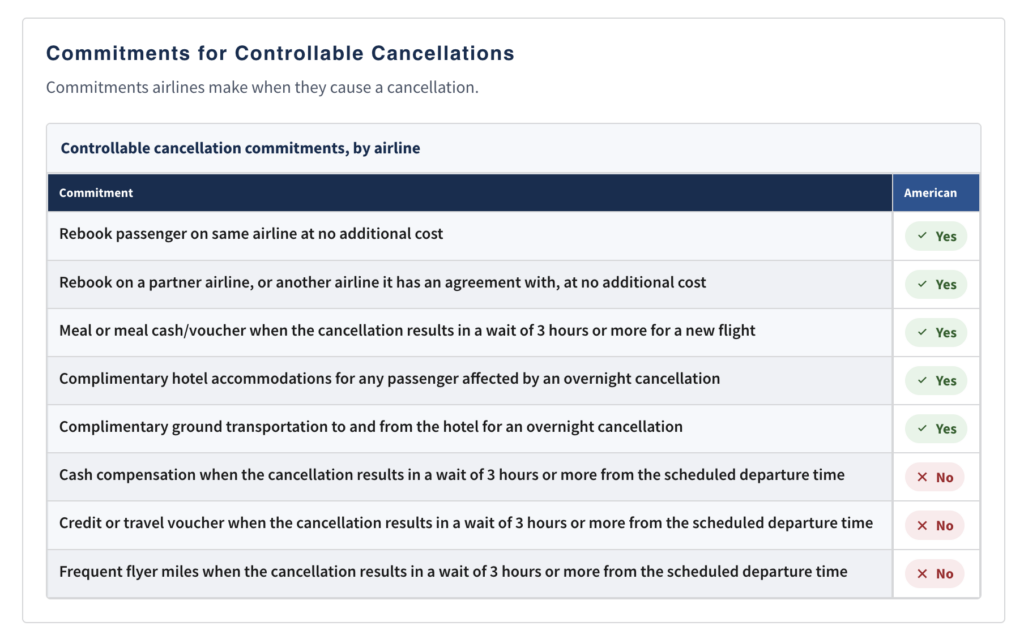
The DOT’s airline customer service dashboard showing American Airlines policies. Credit: DOT
Our advice? Ask anyway. Even if your airline isn’t obligated to cover your expenses, it may still offer assistance. And before spending money on a hotel or transportation, ask whether vouchers are available.
Will Credit Card Travel Insurance Cover the FAA Outage?
Hopefully, your airline has already helped take some of the sting out of being stranded. But if you’re stuck paying for everything yourself, your credit card’s travel insurance might be able to help.
Many popular travel rewards cards—like the Chase Sapphire Preferred® Card, Chase Sapphire Reserve®, and American Express Platinum Card®—offer trip-delay insurance that can reimburse eligible travelers for unexpected expenses like hotels, meals, and toiletries.
But there’s a catch. Credit card travel insurance only covers certain types of disruptions, and it’s not entirely clear whether the FAA outage qualifies.
For example, some policies cover equipment failures, but the specific wording varies by card. The Chase Sapphire Preferred® offers up to $500 per eligible traveler for covered delays exceeding 12 hours or requiring an overnight stay, while the Sapphire Reserve® has a shorter 6-hour threshold.
Related: Chase Sapphire Preferred® Card vs. Chase Sapphire Reserve®
How To Find Out if You’re Covered
Start by checking your card’s guide to benefits or contacting the benefits administrator. Explain that your flight was affected by the FAA outage and ask whether your specific circumstances qualify for trip delay reimbursement.
If you’re eligible, you’ll typically need your original itinerary, proof of payment, receipts for additional expenses, and documentation from the airline explaining why your flight was delayed or canceled.
Keep in mind that trip-delay insurance is generally secondary, meaning it won’t reimburse expenses your airline has already covered.
You can learn more about coverage and filing a claim through Chase’s travel insurance benefits or your American Express card’s guide to benefits.
And don’t put off filing a claim. For example, Chase Sapphire Preferred® cardholders generally must notify the benefits administrator within 60 days of the delay.
What Else Can You Do if Your Flight Was Impacted?
Whether you’re still trying to get home or sorting through the aftermath, there are a few other ways to make the situation less painful.
Know Your Refund Rights
Here’s some good news: Even if your flight was canceled because of the FAA outage, you’re generally entitled to a refund if you decide not to travel. Under DOT rules, airlines must provide refunds when flights are canceled or significantly changed and travelers decline the alternative arrangements.
For domestic flights, a significant delay includes arriving at your destination at least three hours later than originally scheduled. For international flights, that threshold is six hours.
Airlines can’t force you to accept a travel credit instead of a refund when you’re entitled to your money back, either. However, if you accept a replacement flight and complete your trip, you generally won’t qualify for a refund because you arrived late.
Don’t Settle for the First Rebooking Option
Before spending hours on hold, check whether your airline has issued a travel waiver. Several major carriers have introduced flexible rebooking policies following the FAA outage, allowing eligible travelers to change flights without additional fees or fare differences. You should be able to find these waivers on your airline’s website or app, although eligibility and rebooking deadlines vary.
Additionally, if your airline automatically rebooks you on a flight several days later, that doesn’t necessarily mean you’re stuck with it. Check the airline’s app for other available flights, including connecting routes or departures from nearby airports. You can also ask an agent whether rebooking on a partner airline is possible. (In my husband’s case, it was a hard no.)
And don’t overlook standby. Depending on your airline’s policies, you may be able to get on an earlier flight if a seat opens up. Just be careful not to cancel your confirmed replacement flight while exploring other options.
Save Your Receipts and Document Everything
Even if you’re not sure whether your airline or credit card insurance will reimburse your expenses, save everything. That includes hotel bills, meal receipts, transportation costs, and any cancellation notices from the airline.
It’s also worth requesting written confirmation of why your flight was canceled or delayed. That documentation could make a difference if you decide to file an insurance claim or request reimbursement later.
If the airline won’t honor a refund you’re entitled to, you can also file a complaint with the DOT.
Bottom Line
The FAA ground stop may be over, but for some travelers, the headaches are far from finished. If your flight was impacted, start by asking your airline what assistance it can provide. Even if it’s not required to cover your expenses, you might be surprised by what’s available.
And if you’re still stuck with unexpected bills, don’t overlook your credit card’s travel insurance. Coverage isn’t guaranteed, but it’s worth checking before assuming you’re on the hook for everything.
Related Posts
Podcast 176. Pivoting When Your Trip Gets Canceled
Podcast 183. Travel Insurance and What To Do When Travel Goes Wrong with Lisa Jarvis
DOT Airline Consumer Protections


Opinions, reviews, analyses & recommendations are the author’s alone, and have not been reviewed, endorsed or approved by any of these entities. American Express is a Points Talk Squad advertiser, but we always show the best public offer even when we don’t earn a commission. Terms Apply.
Leave a Reply


Advertiser Disclosure: Points Talk Squad has partnered with CardRatings and FinanceBuzz for our coverage of credit card products. Points Talk Squad, CardRatings, and FinanceBuzz may receive a commission from card issuers when a customer clicks on a link, when an application is approved, or when an account is opened. This compensation may impact how or where products appear on this site. Points Talk Squad has not reviewed or included all available credit card offers on this site.
Editorial Note: Opinions expressed here are author's alone, not those of any bank, credit card issuer, hotel, airline, or other entity. This content has not been reviewed, approved or otherwise endorsed by any of the entities included within the post.
be the first to comment
Responses are not provided or commissioned by the bank advertiser. Responses have not been reviewed, approved or otherwise endorsed by the bank advertiser. It is not the bank advertiser’s responsibility to ensure all posts and/or questions are answered.