




June 15, 2026
Best Ways To Use Chase Ultimate Rewards®
Toni Perkins-Southam
Flexible points currencies are only as valuable as the ways you can redeem them. And when it comes to versatility, Chase Ultimate Rewards® are among the strongest options around.
Between airline and hotel transfer partners, redemptions through Chase Travel℠, and newer features like Points Boost, there are plenty of ways to cash in your rewards.
But not all redemption options offer the same value. Here’s a look at some of the best ways to use Chase Ultimate Rewards® and how to decide which redemption strategy makes the most sense.
Transfer Points to Airline Partners for Maximum Value
For travelers, the best use of Chase Ultimate Rewards® is almost always transferring them to airline loyalty programs. Chase currently partners with nearly a dozen airline partners, and transfers are at a 1:1 ratio.
The current Ultimate Rewards® airline transfer partners include:
- Aer Lingus AerClub
- Air Canada Aeroplan
- Air France-KLM Flying Blue
- Iberia Club
- JetBlue TrueBlue
- Singapore Airlines KrisFlyer
- Southwest Rapid Rewards
- The British Airways Club
- United MileagePlus
- Virgin Atlantic Flying Club
Chase also has four hotel partners, including:
- IHG One Rewards
- Marriott Bonvoy
- Wyndham Rewards
- World of Hyatt
While Chase offers several useful transfer options, a few programs consistently stand out because they usually offer great value for points.
Air Canada Aeroplan
Aeroplan is one of the most valuable and flexible airline programs available through Chase Ultimate Rewards®. One of Aeroplan’s biggest strengths is its massive partner network, which opens the door to a huge variety of redemption options.
The program also allows stopovers on many international itineraries for as few as 5,000 additional points, so travelers can visit multiple destinations on a single trip.
Aeroplan can also offer lower award pricing than booking directly through United MileagePlus. For example, a domestic United round-trip flight can cost as little as 12,000 Aeroplan points, which is often cheaper than what United itself charges for the exact same flight.
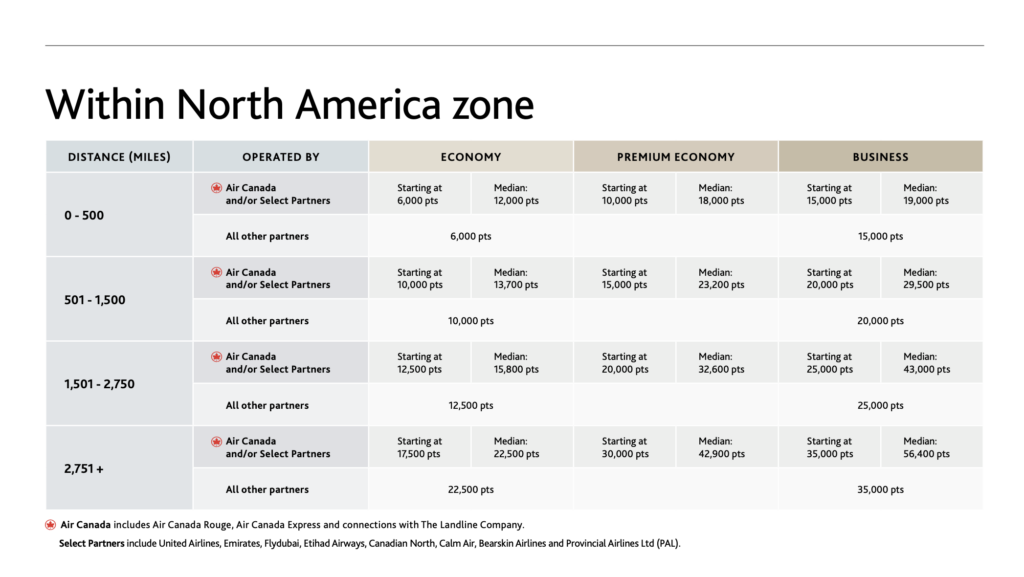
The Aeroplan award chart for flights within its North American zone shows you can fly with partner United for just 6,000 miles each way. Credit: Aeroplan
Related: Aeroplan Changes Ahead: Lock In Current Rates Before June 2026
Flying Blue
Flying Blue, the loyalty program for Air France and KLM, is another Chase transfer partner that can offer solid value.
The program regularly offers monthly Promo Rewards, which discount award pricing on select routes. Flying Blue also tends to have competitive pricing to Europe.
A nonstop flight from Phoenix all the way to Paris in economy runs just 18,750 miles.
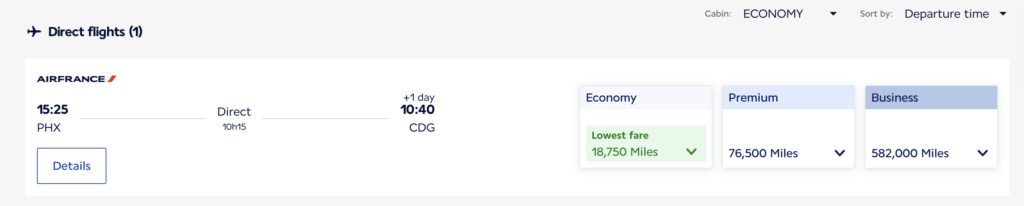
Credit: Air France
Business-class flights from the U.S. to Europe can also be a great deal, although you’ll pay slightly higher taxes and fees. This flight from JFK to CDG runs 60,000 miles.

Credit: Air France
And Flying Blue allows free stopovers on award tickets, so you can visit an additional city like Paris or Amsterdam on the same redemption without paying extra miles.
Chase occasionally offers transfer bonuses to Flying Blue as well, which can make these redemptions even more attractive.
Virgin Atlantic Flying Club
Virgin Atlantic Flying Club can provide some of the best sweet spots in points and miles, but you have to know where to look.
While Virgin Atlantic flights can come with high surcharges, the program still offers excellent value through some of its partner awards. For example, you can use Virgin points to book ANA business- and first-class flights between the U.S. and Japan for far fewer points than competing programs charge. While availability can be limited, these redemptions are often considered among the best sweet spots in points and miles.
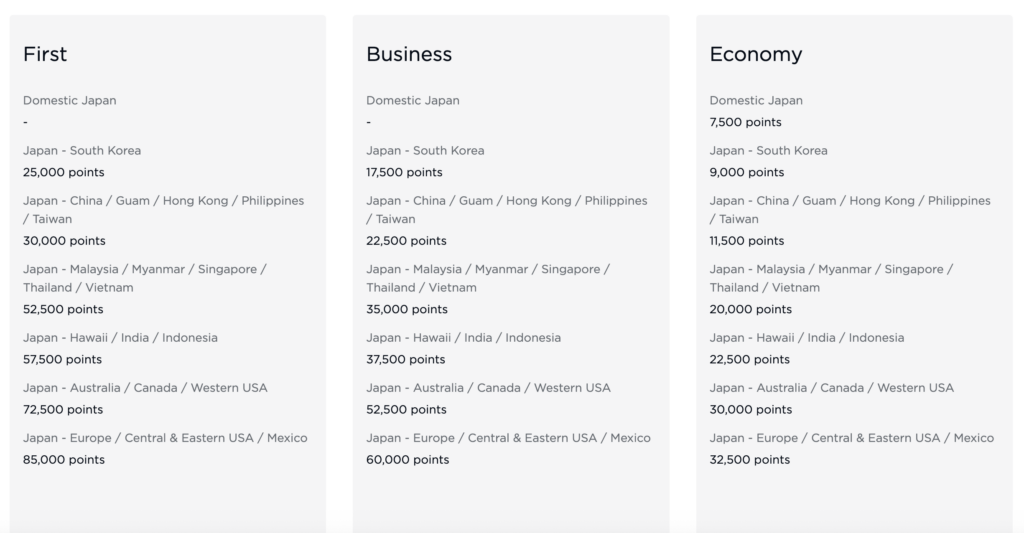
Use Virgin points to book flights to Japan with partner ANA in first class starting at 72,500 miles. Credit: Virgin Atlantic
British Airways and Iberia
The Avios ecosystem gives Chase cardholders several useful options. For one, British Airways Avios can be particularly valuable for short-haul domestic flights on American Airlines and Alaska Airlines. Because the program uses distance-based pricing, nonstop flights can sometimes cost surprisingly few points.
Meanwhile, Iberia can offer excellent pricing on flights to Spain, especially in business class during off-peak periods.
A flight from Chicago to Madrid in the off-peak season is just 16,000 miles in economy and only 40,500 miles in business class.
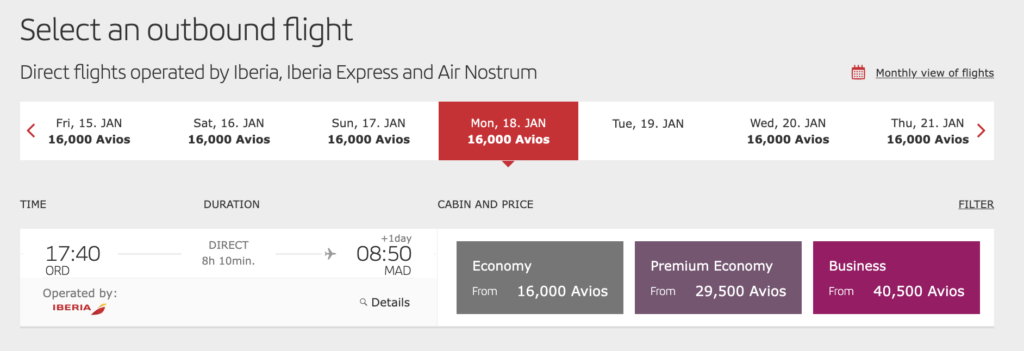
Credit: Iberia
Since Avios can often be transferred between British Airways, Iberia, Aer Lingus, and Qatar Airways accounts, these programs offer additional flexibility once your Chase points are converted.
Use Hyatt for Some of the Best Hotel Redemptions
Among Chase’s hotel partners, World of Hyatt is generally considered the best option for getting outsized value from your points. Unlike many hotel loyalty programs that have moved heavily toward dynamic pricing, Hyatt still maintains an award chart. That means redemption pricing can remain relatively predictable and often extremely valuable.
Chase Ultimate Rewards points transfer to Hyatt at a 1:1 or 4:3 ratio (card-dependent), and some redemptions can easily produce values well above what you’d get if you were to use your Ultimate Rewards® to book hotel stays directly through the Chase Travel℠.
This is especially true at luxury Hyatt properties, all-inclusive resorts, and expensive city hotels during peak travel periods.
For example, the Park Hyatt Paris-Vendôme charges an astounding $2,065 on this particular night. But using World of Hyatt points for the exact same room on the exact same night costs just 35,000 points. That redemption gives you a value of nearly 5.9 cents per point. Note: These rates were correct at the time of posting.
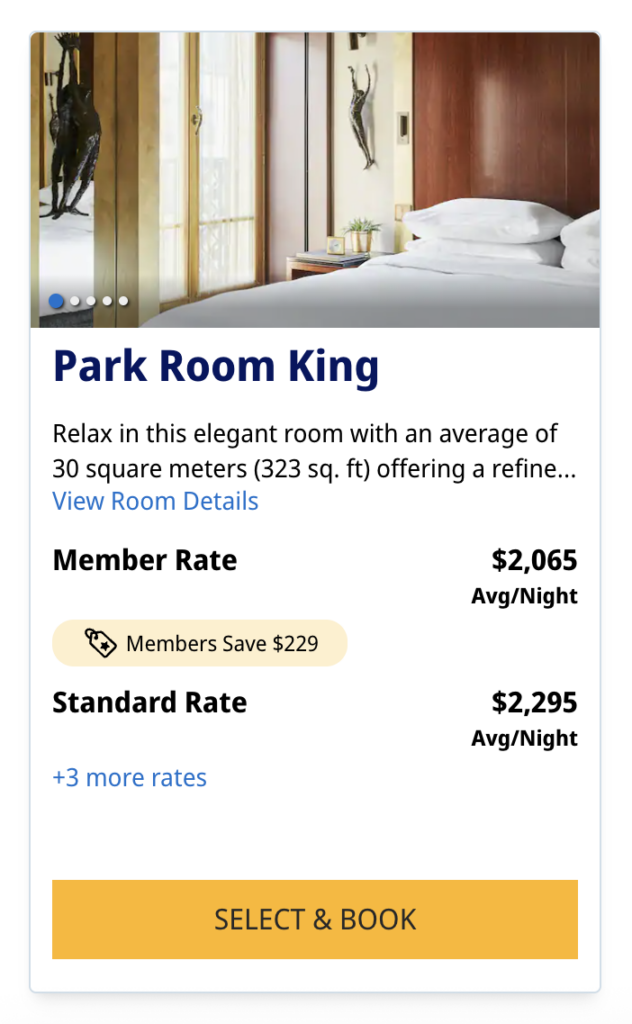
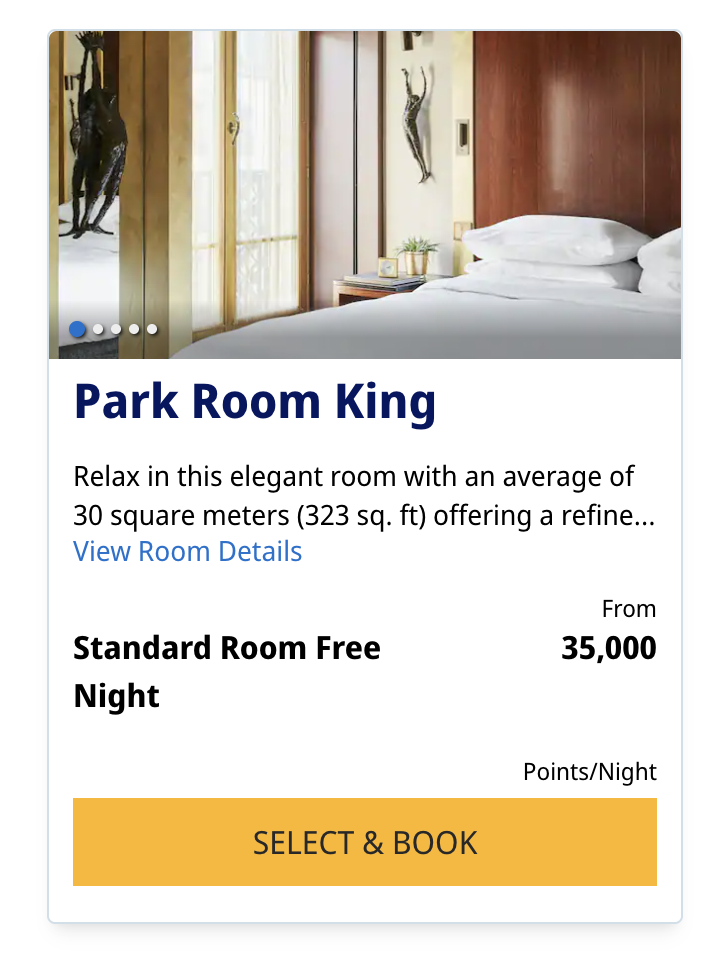
Credit: Hyatt
Hyatt’s lower-category properties can also stretch points surprisingly far for budget-conscious travelers.
When Booking Through Chase Travel℠ Makes More Sense
Transfer partners often offer the greatest value for Chase Ultimate Rewards®, but they are not always the best option.
Sometimes booking directly through Chase Travel℠ is simpler—and occasionally cheaper—especially when:
- Cash airfare is inexpensive
- Award availability is limited
- You want to earn airline miles and elite credit
- You’re flying budget airlines or smaller carriers without Chase transfer partnerships
- Hotels aren’t part of a major loyalty program
Unlike traditional award tickets, flights booked through Chase Travel℠ are treated like paid cash fares. That means travelers can still earn redeemable miles and elite-qualifying credit.
Before transferring points, it’s important to compare the cash price through Chase Travel℠ against the award price through airline or hotel partners. In some cases, booking through the portal may require fewer points overall, especially on inexpensive domestic flights.
You should also compare taxes, fees, and whether a Points Boost redemption is available. And remember that once points are transferred to a partner, they can’t be reversed.
Understanding Chase Points Boost
One of the newer redemption features within Chase Travel℠ is Points Boost. Introduced in 2025, Points Boost allows select flights and hotels booked through Chase Travel℠ to receive elevated redemption values. Depending on your Chase card and the booking, points may be worth up to 1.5x, 2x, or even 2.5x.
For example:
- Chase Sapphire Preferred® Card cardholders can receive up to 1.5 cents per point on eligible bookings
- Chase Sapphire Reserve® cardholders can receive up to 2 cents per point or higher on select redemptions
- Certain luxury hotel bookings have recently reached values as high as 2.5 cents per point
At first glance, that can sound incredibly valuable. And sometimes it absolutely is. But there’s a catch: not every Points Boost redemption offers the same value.
Some redemptions have recently dropped as low as 1.15 cents per point, meaning travelers need to compare options carefully before redeeming.
In other words, just because a booking qualifies for Points Boost doesn’t automatically mean it’s the best redemption available.
Don’t Forget About Transfer Bonuses
Chase periodically offers transfer bonuses to select airline and hotel partners, sometimes providing an additional 20% to 40% in miles, depending on the program and promotion.
For example, with a 25% transfer bonus to Flying Blue, a flight that normally costs 20,000 Flying Blue miles would require only 16,000 Chase Ultimate Rewards®. That’s because transferring 16,000 Chase points would become 20,000 Flying Blue miles after the bonus is applied.
These promotions can significantly improve the value of your points, especially if you already have a specific redemption in mind. However, it’s usually best to transfer points only when you’re ready to book rather than speculatively transferring simply because a bonus exists.
Best Chase Cards for Redeeming Ultimate Rewards Points
Not all Chase cards unlock the full value of Ultimate Rewards®. To transfer points to airline and hotel partners, you’ll need an eligible card, such as the Chase Sapphire Preferred® Card, Chase Sapphire Reserve®, or the Ink Business Preferred® Credit Card.
No-annual-fee cards like the Chase Freedom Unlimited® and Chase Freedom Flex® can also become more valuable when paired with one of these cards, since points can be combined between cards and then transferred to travel partners.
Bottom Line
The best way to use Chase Ultimate Rewards® depends heavily on your travel goals. For travelers seeking maximum value, transferring points to airline and hotel partners will often provide the best returns—especially with programs like Aeroplan, Flying Blue, Virgin Atlantic, and World of Hyatt.
But Chase Travel℠ and Points Boost can still offer strong value in the right situations, particularly for cheap airfare, independent hotels, or premium portal promotions.
The key is flexibility. Rather than defaulting to a single redemption option every time, comparing transfer partner awards against portal pricing can help ensure your Chase Ultimate Rewards® go as far as possible.
Related Posts
7 Reasons Why I Love Chase Ultimate Rewards®
Great Ways to Use Your Chase Ultimate Rewards®
Using Ultimate Rewards® for European Flights
Ways to Accumulate More Ultimate Rewards®


.
Leave a Reply


Advertiser Disclosure: Points Talk Squad has partnered with CardRatings for our coverage of credit card products. Points Talk Squad and CardRatings may receive a commission from card issuers when a customer clicks on a link, when an application is approved, or when an account is opened. This compensation may impact how or where products appear on this site. Points Talk Squad has not reviewed all available credit card offers on this site.
Editorial Note: Opinions expressed here are author's alone, not those of any bank, credit card issuer, hotel, airline, or other entity. This content has not been reviewed, approved or otherwise endorsed by any of the entities included within the post.
be the first to comment
Responses are not provided or commissioned by the bank advertiser. Responses have not been reviewed, approved or otherwise endorsed by the bank advertiser. It is not the bank advertiser’s responsibility to ensure all posts and/or questions are answered.