




April 29, 2026
A Beginner’s Guide to Airline Alliances (and How They Make Award Travel Easier)
Toni Perkins-Southam
If you’ve ever searched for an award flight and wondered why a Lufthansa flight shows up in your United search results, you’ve already brushed up against one of the most useful concepts in points and miles: airline alliances.
Understanding alliances is one of the fastest ways to level up your travel strategy. It opens more routes, more availability, and often, better deals. Once you get the hang of it, you’ll stop thinking in terms of “which airline do I have points with?” and start thinking “which program gives me the best deal for this flight?”
Let’s break it down.
What Is an Airline Alliance?
An airline alliance is a group of airlines that partner together to share routes, certain benefits, and booking access.
Instead of operating in isolation, airlines within an alliance coordinate schedules, honor each other’s elite perks, and—most importantly for points people—make award seats available across programs.
There are three major global alliances:
- Star Alliance
- Oneworld
- SkyTeam
Each alliance includes a network of airlines that spans the globe, meaning you can book a flight on one airline using points from another.
The Three Major Airline Alliances
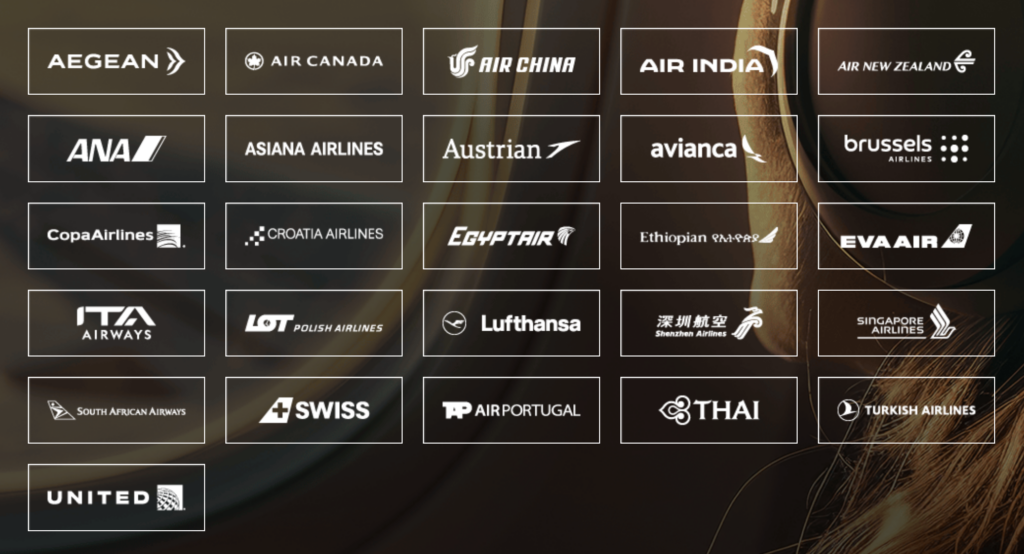
Star Alliance
Credit: Star Alliance
Star Alliance is the largest airline alliance, both in the number of airlines (over 25) and global reach.
If you’re based in North America, this can be a great alliance to start with, thanks to airlines like United and Air Canada.
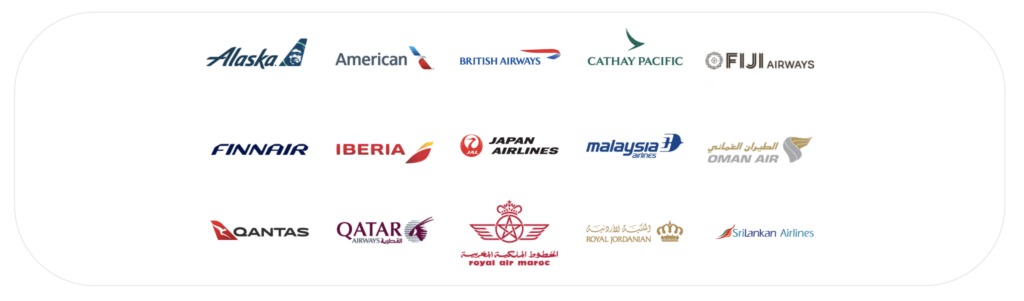
Oneworld
Credit: Oneworld
Oneworld has fewer airlines (over a dozen), but its lineup is strong, especially for carriers with great premium-cabin experiences. Think Qatar Airways Qsuites or Cathay Pacific business class.
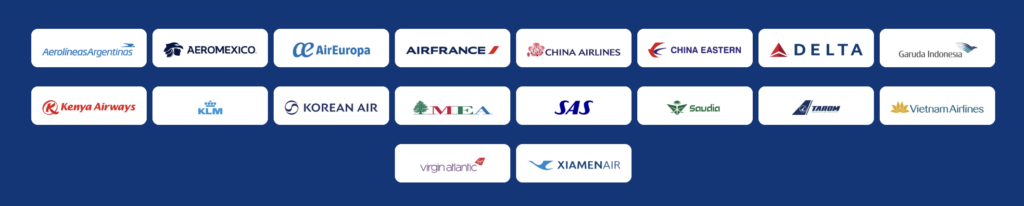
SkyTeam
Credit: SkyTeam
SkyTeam and its 15+ partners tend to fly a little more under the radar, but it still offers solid value, especially through programs like Virgin Atlantic.
How Airline Alliances Work for Award Travel
The core idea is this: you use miles from one airline to book flights on another within the same alliance. Another way to think of it is that the plane is operated by one airline, but booked through another.
This is called a partner award booking, and it’s where things start to get exciting. Here are a few examples:
- You can use United miles to book a Lufthansa flight.
- You can use American Airlines miles to book Qatar Airways.
- You can use Virgin Atlantic Virgin Points to book Delta.
Partner award bookings open up more departure cities, more destinations, and more ways to piece together an itinerary. If you have United MileagePlus miles but United doesn’t fly to the destination you have in mind, maybe Lufthansa or Turkish Airlines does. And you can still book it with your United miles.
Better Award Availability
Airlines don’t always release the same award seats to their own members as they do to partners. Fortunately, partner space can sometimes be easier to find than you’d expect (with exceptions, of course).
If one program doesn’t show any availability, checking a partner program may reveal options you wouldn’t otherwise see.
Lower Redemption Costs
Here’s my favorite part of airline alliances: different airline programs often price the exact same flight differently, even within the same alliance. That means you can “shop” for the best deal. Same seat. Same plane. Completely different price. And there are some incredible sweet spots that exist here.
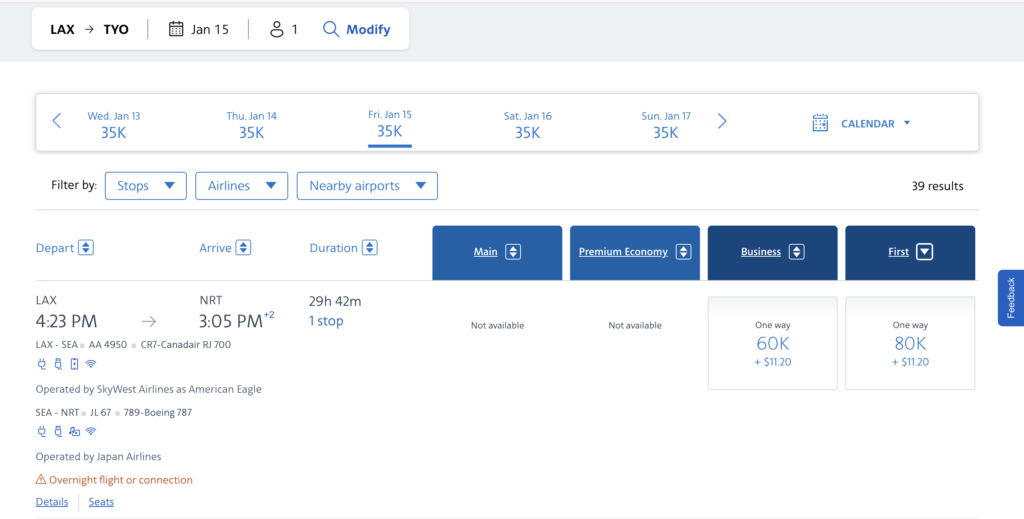
A flight from LAX to Tokyo in Japan Airlines first class can be booked for just 80,000 AAdvantage miles and a measly $11.20.
Credit: American Airlines
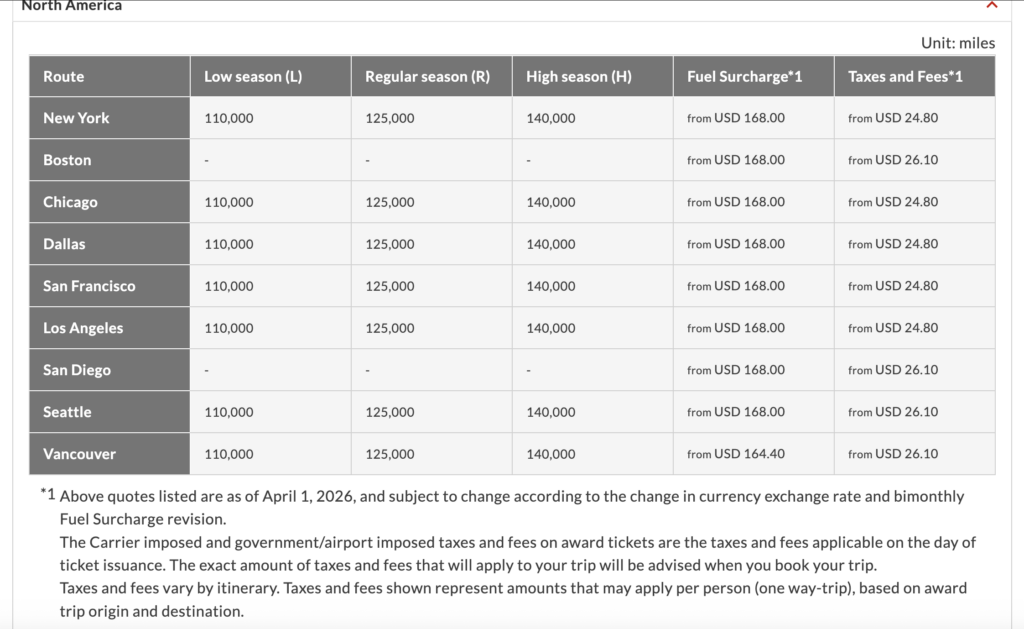
Looking at JAL’s award chart (more on what award charts are later), this flight would otherwise cost 110,000 Mileage Bank miles, plus significant taxes and fees.
Credit: Japan Airlines
Alliances vs. Transfer Partners: What’s the Difference?
Alliances are partnerships between airlines. Transfer partners are the airline loyalty programs that allow you to transfer points between banks (like Chase or Amex) and airline programs. They overlap, but they’re not the same thing.
For example:
- Chase Ultimate Rewards® can transfer to United (Star Alliance)
- American Express Membership Rewards® can transfer to Air Canada (Star Alliance)
- Capital One Venture Miles can transfer to British Airways (Oneworld)
Once your points are in an airline’s loyalty program, you’ll have access to book flights with its alliance partners. So even if you want to book a Lufthansa flight but you don’t have Lufthansa miles, and your bank doesn’t allow you to transfer points to Lufthansa’s loyalty program, you can potentially still book a Lufthansa flight by transferring your points to United or Air Canada instead.
How To Actually Use Alliances (Step by Step)
We could write several blog posts alone on how alliances work (and we have). But while the details can get crazy, there are some basics for working with alliance partners.
Step 1: Understand Award Charts
Before you even start your search, you need to understand why the same flight can cost wildly different amounts depending on which program you use.
Enter award charts. Many programs use them to set fixed or semi-fixed pricing based on factors like:
- Distance flown
- Regions (e.g., U.S. to Europe)
They are further divided by cabin class. As you would expect, a business-class ticket will cost more points than an economy ticket for the same flight, and award charts reflect this.
Others use dynamic pricing, where the points cost fluctuates more like a cash ticket.
And some programs blend approaches. Air Canada Aeroplan, for example, uses a hybrid model with published distance-based ranges, while American Airlines prices awards dynamically but still publishes “starting at” levels to give you a rough idea of what to expect.
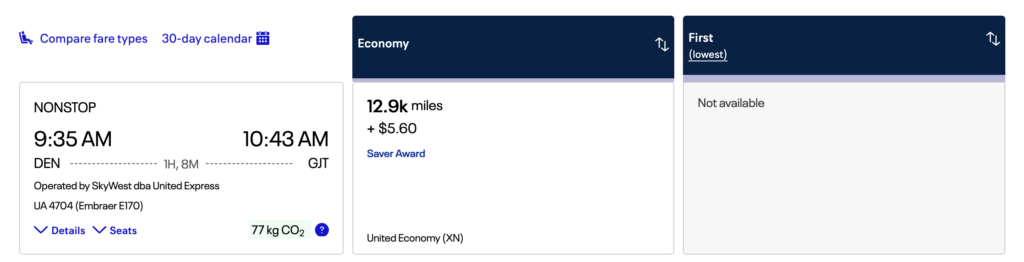
Even within the same alliance, each program prices awards differently. Take a flight from DEN to GJT (Grand Junction, Colorado). United flies direct to GJT. The options are:
Pay 12,900 MileagePlus miles for a booking directly through United.
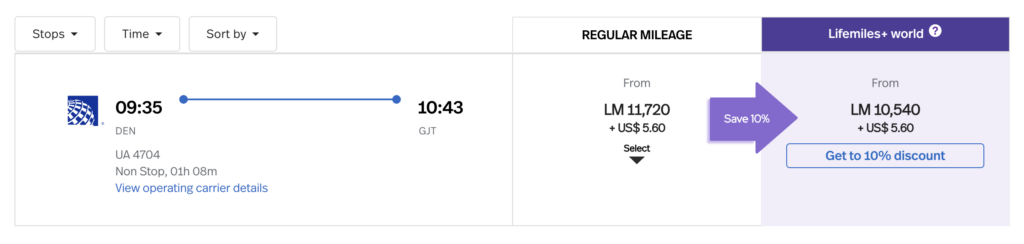
Or pay 11,720 miles using Avianca LifeMiles to fly on the same flight.
But if you really wanted to save miles (although you’ll pay a bit more in taxes) you could book the flight through Air Canada Aeroplan for just 10,000 miles.

The above concept goes well beyond just United and its partners.
Step 2: Find the Flight You Want
You’ll want to start with a search tool. Some of the most beginner-friendly options include:
- United.com (great for Star Alliance)
- Air Canada Aeroplan
- The British Airways Club (great for Oneworld)
- Air France-KLM Flying Blue (good for SkyTeam)
You can also use third-party tools to speed things up. Tools like Point.me, Seats.aero, and AwardTool search across multiple programs and can help you quickly spot availability and compare pricing without jumping between websites.
Step 3: Compare Prices Across Programs
Before booking, make sure to check other partner programs, especially as a beginner. There is a lot of nuance to each program, and until you have that etched into your memory, it’s best to continue checking across loyalty programs.
But prices come from more than just the award cost. Some programs (looking at you, British Airways) can pass along high surcharges—we are talking four-figure prices for some routes and cabin classes. A “cheap” award in miles through one of these programs can come with a hefty cash co-pay that you’ll want to think about.
Step 4: Transfer Points (If Needed)
Once you’ve picked the best program and confirmed availability, it’s time to transfer points from your bank (e.g., Chase, Amex, Citi, etc.)
Most transfers are instant; however, transfers from certain banks to certain programs may take longer. And any glitches or hiccups in the process could delay things even more. For example, if your bank information doesn’t match your airline program information (e.g., you’re listed as Elizabeth with your bank but as Liz with your airline account), getting that ironed out could take some time. So always make sure your information matches perfectly.
Being aware of transfer time issues is vital because award space can disappear quickly, especially on popular routes. You don’t want to end up with no flight and orphaned miles because your miles took too long to transfer due to informational issues or long transfer times.
A Few Things To Know Before You Book
Before you start booking through partner programs, there are a few key things to keep in mind:
- Not all partners see the same availability. If one site shows nothing, try another.
- Taxes and fees can vary widely. A lower mileage price doesn’t always mean a better deal.
- Transfers are one-way. Once you move points to an airline, you can’t move them back.
- Always confirm availability before transferring points. Award space can disappear quickly, so you’ll want to make sure the flight is still bookable before you move your miles.
Bottom Line
Airline alliances are one of the most powerful tools in award travel, but only if you know how to use them.
They expand your options, improve your chances of finding availability, and, most importantly, give you multiple ways to price the exact same flight.

Related Posts
Japan Airlines Business Class Review

.
Leave a Reply


Advertiser Disclosure: Points Talk Squad has partnered with CardRatings for our coverage of credit card products. Points Talk Squad and CardRatings may receive a commission from card issuers when a customer clicks on a link, when an application is approved, or when an account is opened. This compensation may impact how or where products appear on this site. Points Talk Squad has not reviewed all available credit card offers on this site.
Editorial Note: Opinions expressed here are author's alone, not those of any bank, credit card issuer, hotel, airline, or other entity. This content has not been reviewed, approved or otherwise endorsed by any of the entities included within the post.
be the first to comment
Responses are not provided or commissioned by the bank advertiser. Responses have not been reviewed, approved or otherwise endorsed by the bank advertiser. It is not the bank advertiser’s responsibility to ensure all posts and/or questions are answered.